If your car drifts to one side, your steering wheel sits crooked or your tires are wearing unevenly, these symptoms may indicate an alignment concern — and it's costing you money every mile. Texas Collision Centers corrects it with precision alignment equipment and certified technicians. Because we're trusted to restore vehicles to exact factory specifications after collisions, dialing in your alignment is second nature to us.
Wheel alignment adjusts the angles of your wheels back to the manufacturer's exact specifications. Proper wheel alignment helps promote even tire wear, straight tracking and predictable handling while reducing unnecessary rolling resistance. We offer both front-end (two-wheel) and full four-wheel alignments depending on your vehicle and its needs.
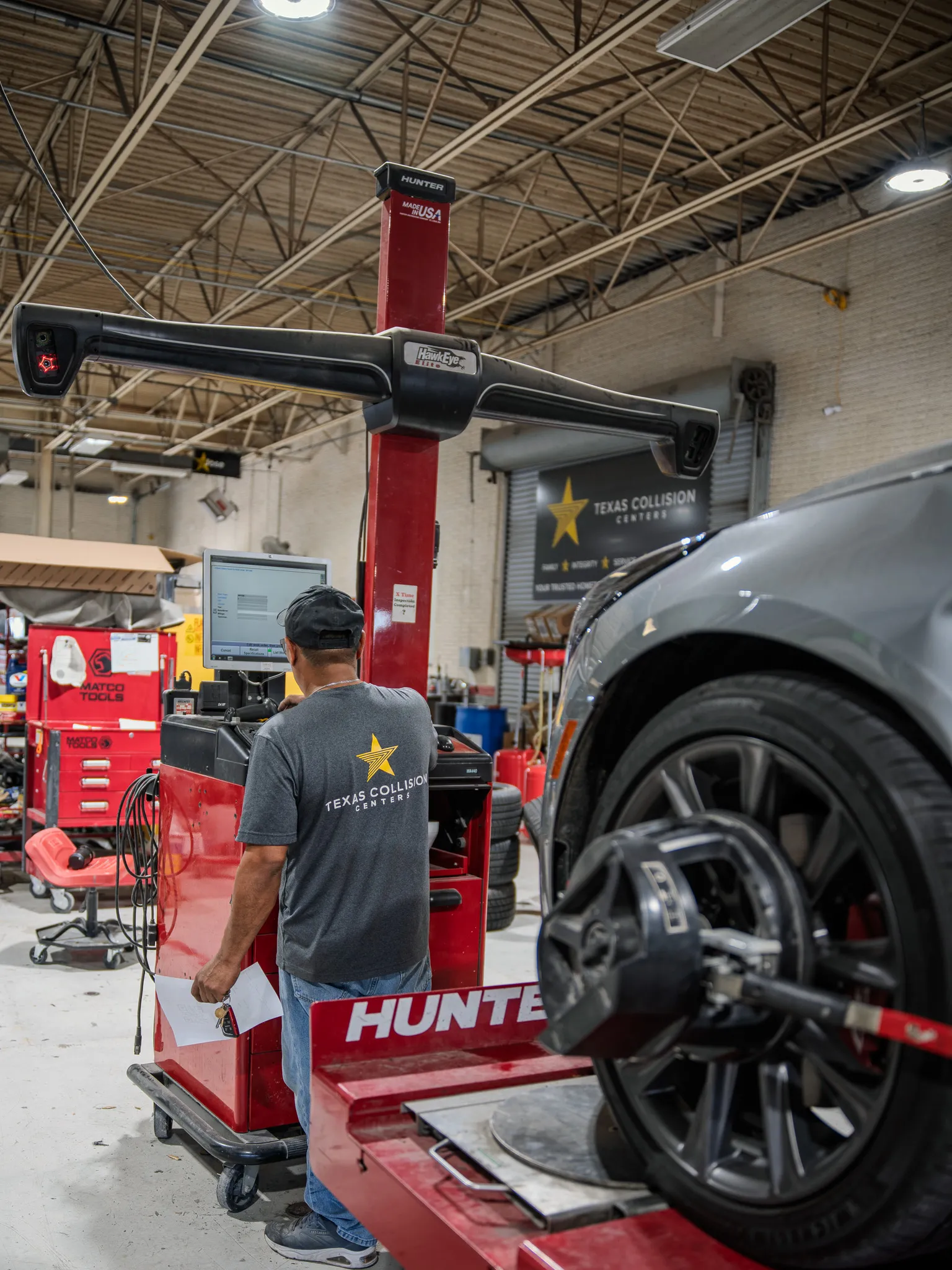
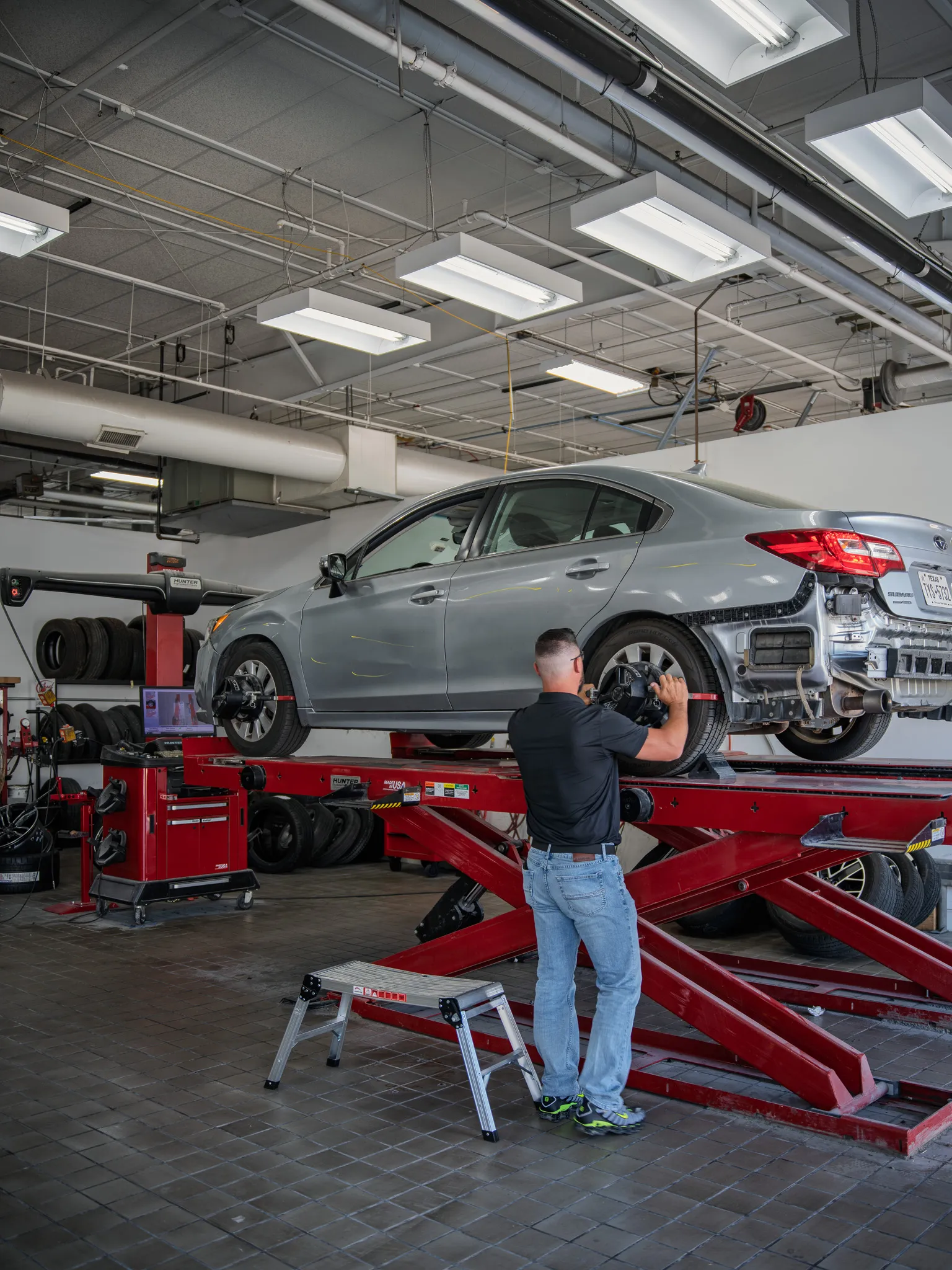
Bring your vehicle in if you notice any of these: your car pulls left or right on a straight road, your steering wheel is off-center when driving straight, your tires are wearing unevenly or wearing out fast, or your steering feels loose or vibrates. Hitting a pothole or curb is a common cause — and one worth checking after.
An alignment protects your tires, and new tires deserve a proper alignment. Pair the two whenever you replace your tires to get the full life out of your set.
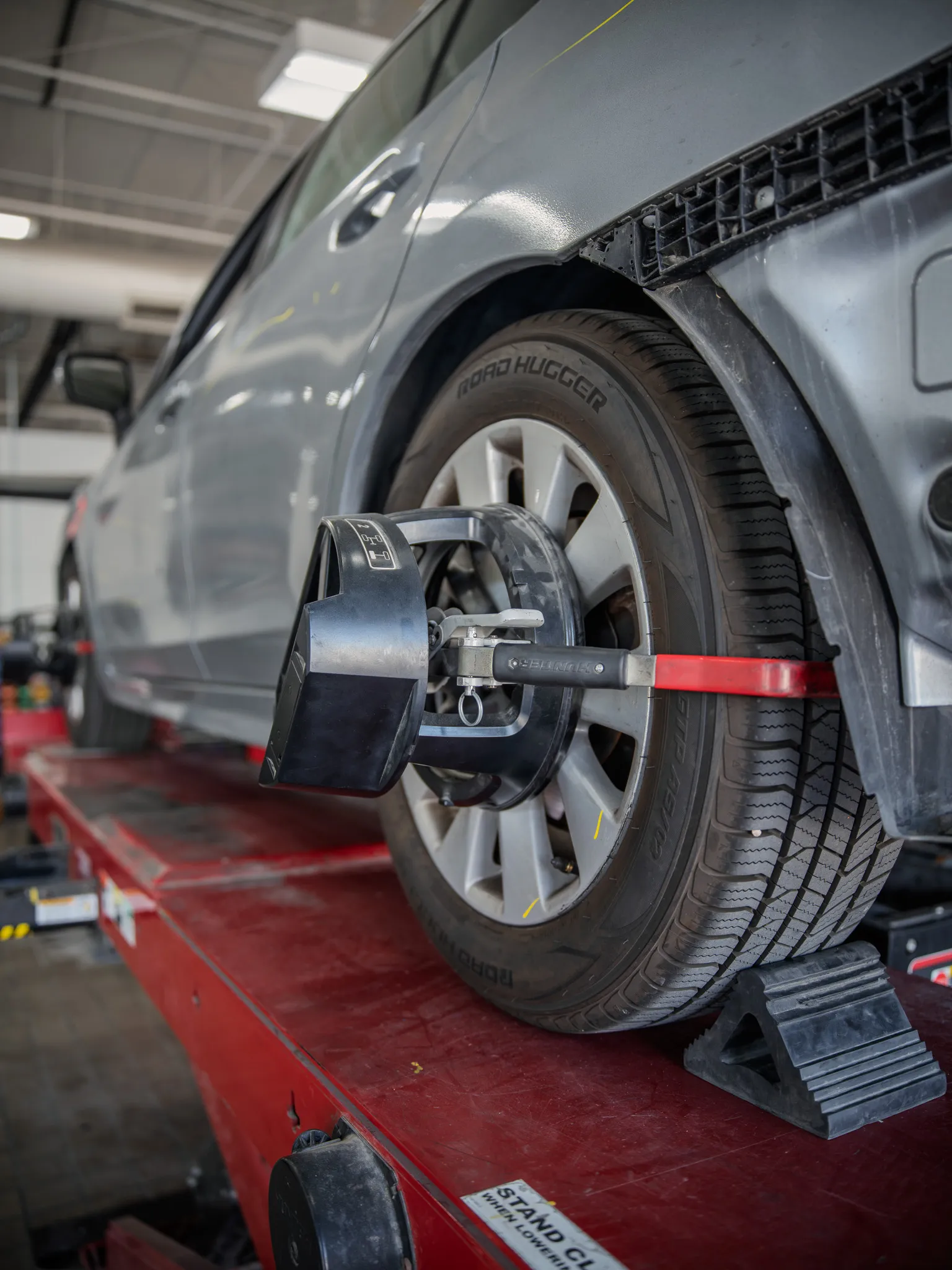
Restoring exact factory measurements is a core part of collision repair, and it's why alignment is a natural strength for our team. The same equipment and expertise that put a repaired vehicle back to spec keep your everyday driver tracking true.

The most common signs are your vehicle pulling to one side, an off-center steering wheel, uneven or rapid tire wear, or steering that feels loose. If you've recently hit a pothole or curb, it's worth having your alignment checked.
There is no single alignment interval that applies to every vehicle. We recommend checking alignment when you notice uneven tire wear, steering pull or an off-center steering wheel as well as after a significant pothole or curb impact, suspension repair or tire replacement.
A two-wheel (front-end) alignment adjusts only the front wheels and suits some vehicles. A four-wheel alignment adjusts all four and is recommended for most modern cars, all-wheel-drive vehicles, and any vehicle with independent rear suspension. Our technicians will recommend the correct one for your car.
Yes. Even a slight misalignment causes tires to wear unevenly and prematurely, which can cost you a full set of tires far sooner than necessary. A timely alignment pays for itself.
Alignment time varies by vehicle and whether worn, damaged or non-adjustable components are found during inspection. Scheduling ahead helps us plan the appropriate time for your vehicle.”
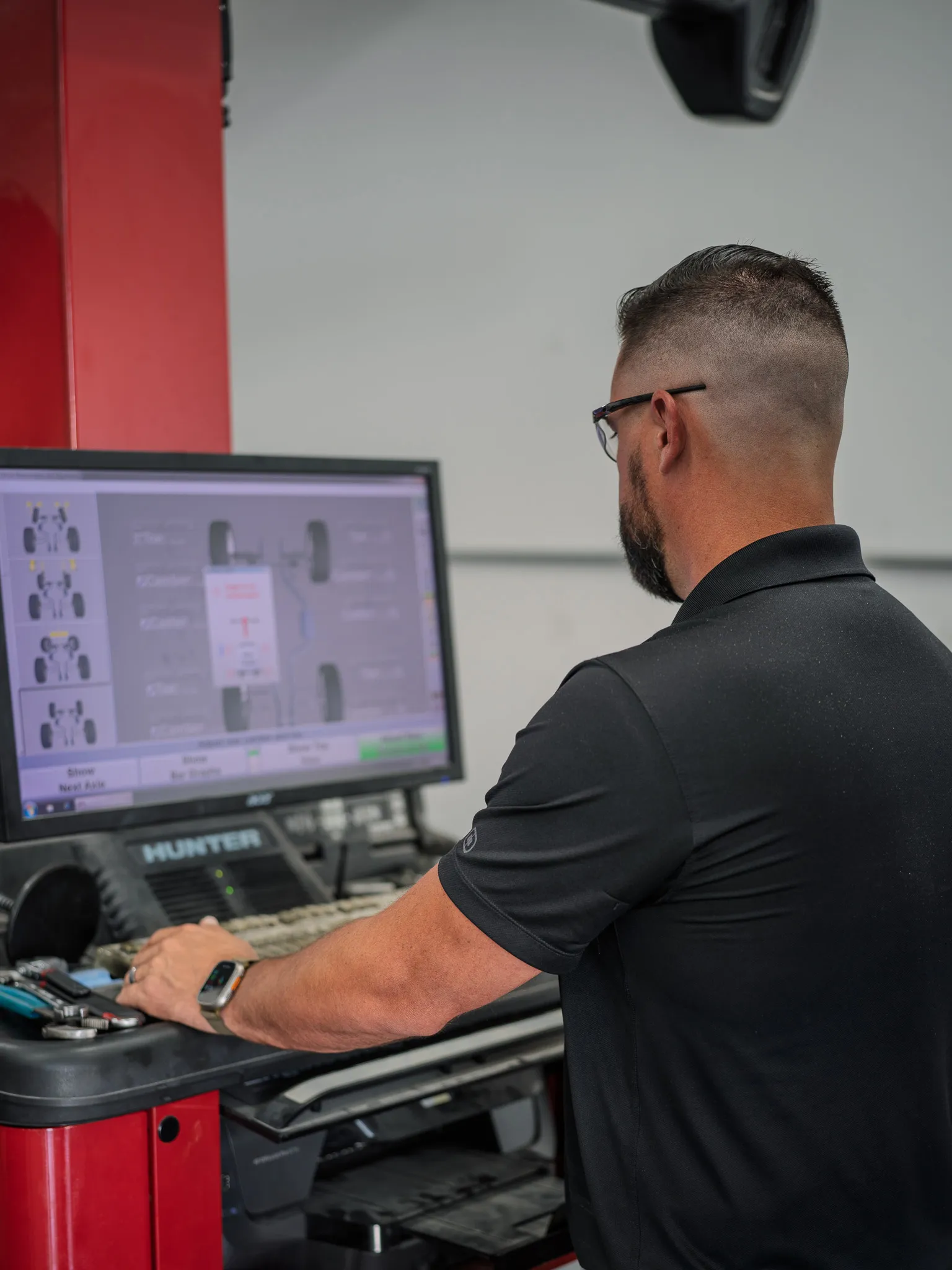

Your hometown collision repair centers.


